
Shirakawa-go: a village of prayer-shaped roofs, still lived in today
Start with the answer: Shirakawa-go is not an open-air museum. It is a living mountain village in Gifu Prefecture where about 500 people still live in more than 100 steep-roofed, thatched farmhouses — and it has been a UNESCO World Heritage Site since 1995.
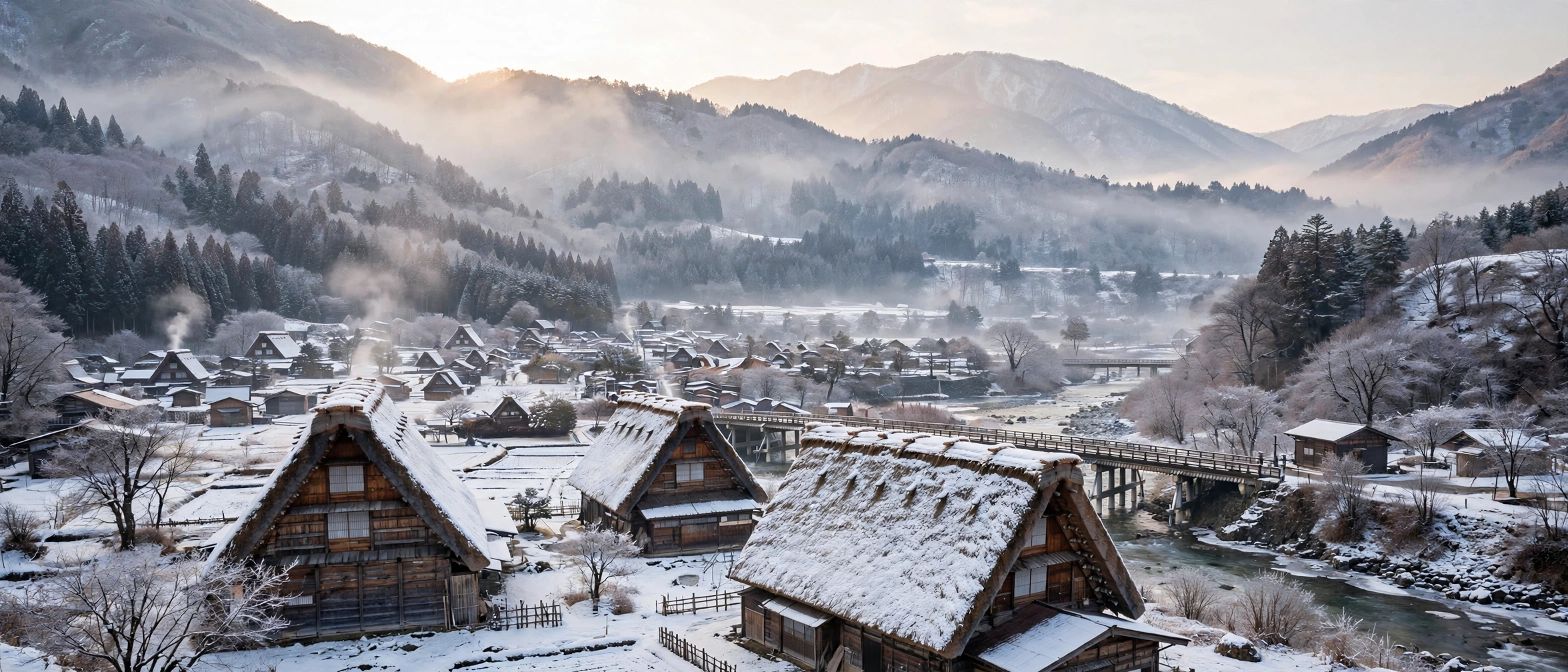
Why the roofs pray
The houses are called gassho-zukuri, "built like hands in prayer," because their roofs rise at about 60 degrees, like palms pressed together. The shape is not decoration. This valley gets some of the heaviest snow in Japan, and the steep thatch lets the snow slide off. Inside the roofs, families once raised silkworms; under the floors, they made an ingredient for gunpowder. And when a roof needs re-thatching, the whole village climbs up to do it together — a tradition of mutual help called yui that is part of why this place was worth protecting.
A living village, visited by the world
People come from all over the world to see it. In 2024, about 2.08 million people visited this small village, and for the first time more than half of them — about 53.5% — came from overseas (figures: Shirakawa Village). The closest gateway town is Hida Takayama, about 50 minutes away by bus, and this guide treats the two as one trip: Takayama's old streets and morning markets, then the bus up into the mountains to Shirakawa-go.
What is on this site
- Highlights — the houses you can go inside, the viewpoint, and the open-air museum
- Getting There — buses from Takayama, Kanazawa, Toyama and Nagoya, and where to ask in English
- Stay & Eat — sleeping inside a thatched farmhouse, and what to eat
- Hida Takayama — the gateway town, worth a day of its own
- History — why the roofs look like praying hands, told in words
- Good Manners & Plan Your Visit — the village's own five requests, and the reservations to make before you come
- Japanese Manners for Travellers — the shared manners page for travelling in Japan
- Map & Destinations — one map for Kurashiki, Shirakawa-go and Hida Takayama
One thing to know before anything else: the village asks visitors to treat it as a home, not a theme park. Read the manners page before you go — it will make your visit better, not smaller.