
What to see in Shirakawa-go: three farmhouses, one viewpoint, and a village to walk slowly
You can see the whole village on foot in two to three hours. Everything below is within walking distance of the Shirakawa-go Bus Terminal. If you only have half a day, do these in order: the viewpoint first for the whole picture, then the Wada House, then a slow walk.
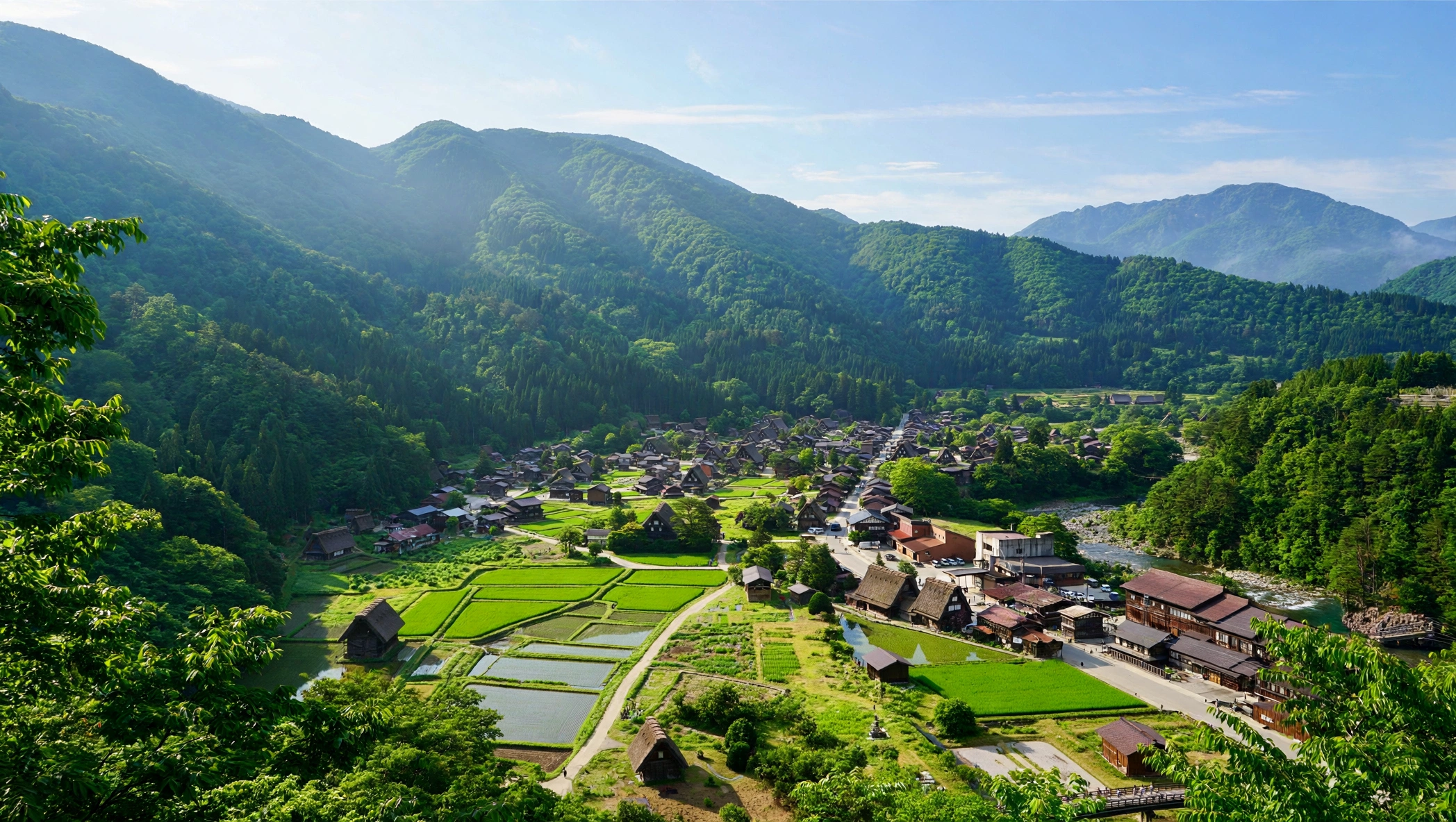
The village of Ogimachi
More than 100 gassho-zukuri houses stand along the Sho River, most of them still family homes. The village itself is the sight — rice paddies, irrigation channels, and roofs rising above them. Walking is free; just remember that houses without an "open" sign are private homes (see the manners page).
Shiroyama Viewpoint (Ogimachi Castle Ruins Observation Deck)
The classic postcard view over the whole village. A shuttle bus runs from near the Wada House (¥300 one way), or you can walk up in about 20 minutes. The walking trail can close after heavy snow.
Wada House — the largest gassho-zukuri house in the village
The Wada family were village headmen and checkpoint officials who grew wealthy trading saltpeter (a gunpowder ingredient) and raw silk. Their house is a National Important Cultural Property, still partly lived in, with family tools and treasures on display. Explanations are in English on the second floor.
About 3 minutes on foot from the bus terminal. Open 9:00–17:00, irregular closing days. Admission ¥400 (adults) / ¥200 (elementary school children), cash only. Guide price, checked November 2026.
Kanda House — the house that took ten years to build
Look under the floor: this is where saltpeter was once made. The Kanda House is loved for the beauty of its wooden framework, and a brochure inside explains the structure.
About 7 minutes on foot from the bus terminal. Closed on Wednesdays (open if Wednesday is a national holiday). Admission ¥400 / ¥200, cash. Guide price, checked November 2026. Opening hours are shown differently in different official notices — check on the day.
Nagase House — five storeys tall
The tallest gassho-zukuri in the village, with a Buddhist altar said to be about 500 years old and old farming and silkworm tools on the upper floors. A video shows the day about 500 people re-thatched its roof by yui, the village's system of mutual help.
About 8 minutes on foot from the bus terminal. Open 9:00–17:00, irregular closing days. Admission about ¥300–400, cash — the village's own materials show two different prices, so check at the door.
Myozenji Temple Museum
A temple built like a farmhouse: the main hall, the priest's house and the bell tower all wear thatched gassho roofs. Inside the hall are wall paintings by a noted Kyoto painter, and the hearth in the old kitchen is always lit.
About 10 minutes on foot from the bus terminal. April–November 8:30–17:00; December–March 9:00–16:00. Admission about ¥300–400. Guide prices, checked November 2026.
Gassho-zukuri Minkaen Open-Air Museum
Twenty-five farmhouses that were no longer needed in the village were moved here and rebuilt instead of being lost — nine of them are prefectural cultural properties. You can climb right up into the attics, and tea is served by the hearth in the rest house. It stands just across the parking area, before you cross the Deai Bridge into the village.
About 12 minutes on foot from the bus terminal. March–November 8:40–17:00; December–February 9:00–16:00 (closed Thursdays in winter). Admission ¥600 (adults) / ¥400 (children). Guide prices, checked November 2026.
Deai Bridge
The 107-metre pedestrian suspension bridge over the Sho River is the village's front door, and a viewpoint in itself — especially in autumn.
In winter: the Light-Up
On a few evenings each winter, the snow-covered village is lit up. In 2027 the dates are January 11, 17, 24 and 31. It is fully reservation-based — without a booking you cannot enter, not even the car park. See the manners and planning page.
In the south: Hirase Onsen
Fifteen minutes by bus from the heritage area, Hirase is the village's hot-spring hamlet — a good place to warm up in winter. The ryokan Shirakawago no Yu, inside the heritage area itself, also welcomes day bathers (prices on the day).