
This village is somebody's home: five requests from Shirakawa-go itself — and how to plan around them
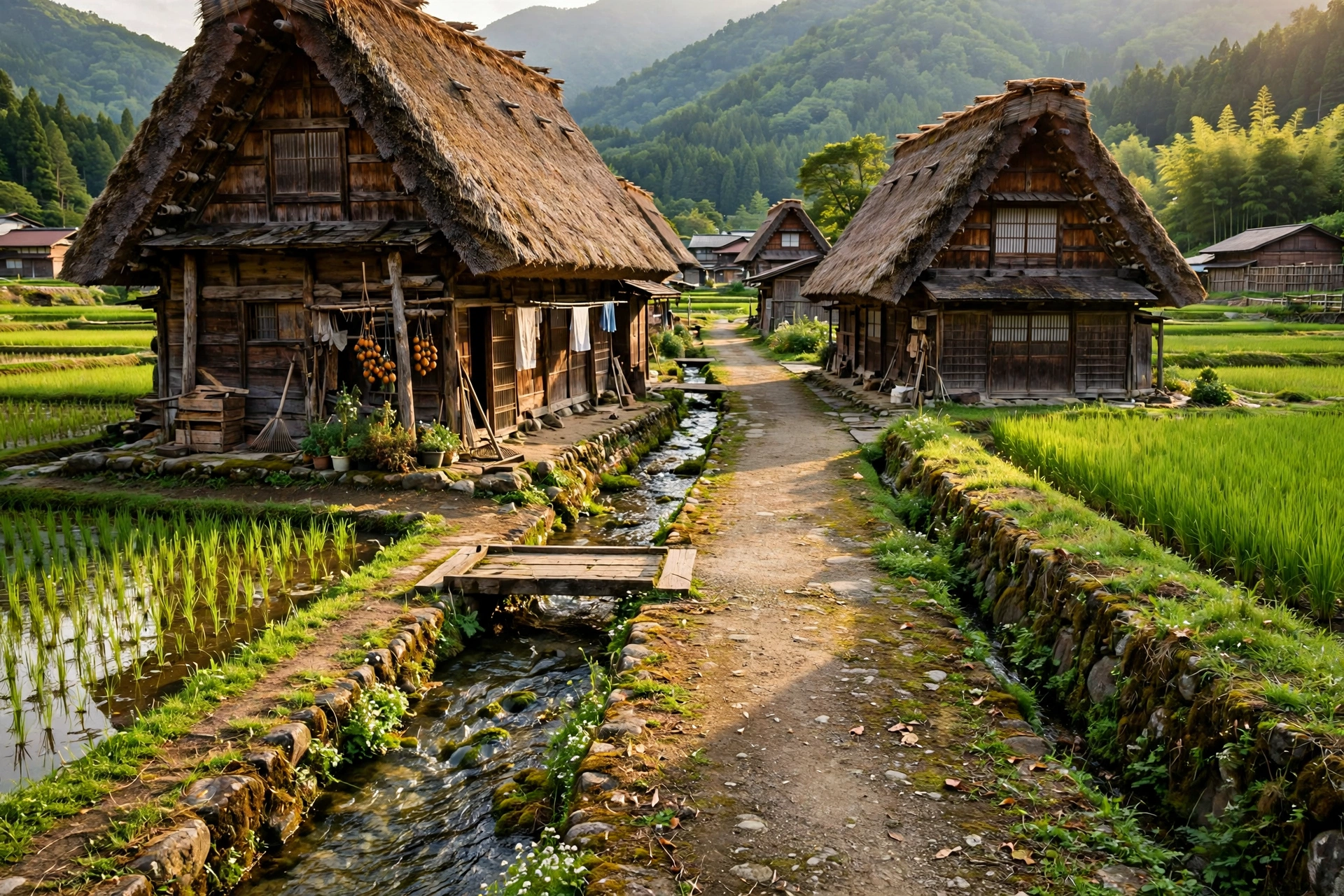
Shirakawa Village publishes five etiquette requests for visitors under the name Responsible Tourism. They are not fine print; they are the reason the village still exists. About 500 people live in the heritage area, and around 2.15 million visitors a year come to see how they live. Here are the five, in the village's own order, plus the practical planning that goes with them.
The village's five requests
- 1. Park in the designated car park. There is no tourist parking inside the gassho village, and tourist vehicles may not enter the heritage area (sightseeing traffic is kept out between 9:00 and 16:00). Use Seseragi Park Parking across the river (¥2,000 per standard car, 8:00–17:00, last entry 16:30) and walk in over the Deai Bridge. Part of your parking fee funds preservation.
- 2. Fire is strictly prohibited. Thatched roofs catch fire terrifyingly fast. Never drop cigarette ends, never use fireworks, and smoke only in the three designated smoking areas in the village. The residents patrol for fire 365 days a year, and every household looks after one of the village's 60 water cannons. This is the request the village cares about most.
- 3. Take your rubbish home. There are no rubbish bins in the village — none. Shirakawa has no waste-processing facility of its own and contracts the work to a city 50 km away. Rubbish from village shops can go back to those shops; everything you bring in, carry out.
- 4. No night sightseeing. Evenings belong to the residents — and to guests staying in the village. Day visitors should plan around the parking hours (8:00–17:00). If you want the lantern-lit lanes and the silent, snowy morning, stay the night.
- 5. No drones. Drones are prohibited throughout the village, to protect residents' privacy and the houses themselves. For the view from above, use the Shiroyama Viewpoint — shuttle bus ¥300 one way, or about 20 minutes on foot. Tripods are also not allowed at the viewpoint during the winter light-up.
Everyday courtesies
The houses are homes. Do not step into gardens, fields, or under the eaves of houses that are not open to the public; take photographs from the street without blocking it; keep voices down; and let residents' cars pass. Only enter the houses marked as open.
Plan your visit — the checklist
- Reserve the bus. All buses from Kanazawa and Toyama are reservation-only, and Takayama buses fill up in busy seasons. Book seats as soon as your dates are set.
- Reserve the bed. Farmhouse inns are few and open bookings about three to four months ahead. In festival and light-up seasons, earlier is better.
- The winter light-up is reservation-only. January 11, 17, 24 and 31 in 2027. Without a reservation you cannot enter the village for the event or even use the car park.
- Dress for real winter. From December to March this is one of Japan's snowiest inhabited places: a down jacket, waterproof boots with grip, hat and gloves. Temperatures can fall below −5°C. Drivers need winter tyres from early December to late March.
- Allow for snow delays. Buses can run two hours late in bad weather. Do not plan a tight connection after Shirakawa-go in winter.
- Time your walk. The village takes two to three hours on foot. For the quietest experience, stay overnight or arrive on the first bus of the day.
- Carry some cash. The museum houses take cash only, and small inns and stalls may not take cards.
- Check before you go. Opening days of the individual houses are irregular. The Tourist Association's site carries the current information: Shirakawa-go Tourist Association