
Sleep in a thatched house: the village after the day buses leave
Here is the result first: the best reason to stay overnight is not the room — it is the village at 7 a.m. and 7 p.m., when the day visitors are gone and Shirakawa-go belongs to the people who live there. Night sightseeing is not allowed for day visitors, so the quiet, starlit village and the misty early morning are for staying guests only.
Where to stay
Most farmhouse inns (minshuku) are inside gassho-zukuri houses in Ogimachi. The Shirakawa-go Tourist Association's accommodation guide (January 2026) lists farmhouse inns from ¥14,000 per person and ryokan from ¥13,000 per person — treat these as guides; each inn sets its own price, usually including dinner and breakfast of home-grown rice, mountain vegetables and river fish. There are only a few dozen inns, and they typically open bookings three to four months ahead. Book through the Tourist Association's website — it is the official route, and it works in English.
- Juemon — a gassho-zukuri inn with nearly 300 years of history. Choose it if sleeping in an old house is the point of your trip.
- Yoshiro — a small gassho inn of just two or three rooms, gathered around an irori open hearth. Warm, family-style hospitality; book early because it is tiny.
- Kidoya — a gassho house near Shirakawa Hachiman Shrine and Myozenji Temple, known for seasonal mountain vegetables and river fish at the table.
- Hisamatsu — a gassho inn built for talking around the hearth; the whole house can be rented by one group, which suits families and friends travelling together.
- Nodaniya — in front of Hachiman Shrine, famous for the autumn Doburoku Festival. Rooms are let without meals, which suits travellers who want to eat out freely. Shower rooms were renovated in 2019.
- Shirakawago no Yu — if you would rather have a ryokan than a farmhouse: a hot-spring inn inside the heritage area (renewed in 2023), with day bathing for non-guests as well.
English at the inns themselves varies and is not officially stated — the Tourist Association's English site and information centre (see Getting There) are the reliable bridge. Prices above are the association's guide figures, checked November 2026.
What to eat
- Farmhouse dinners — the minshuku table is the real local restaurant: soup and pickles, mountain vegetables (sansai), river fish, and rice the family grew itself.
- Hida beef — Gifu's certified wagyu brand, from black cattle raised in the prefecture for at least 14 months. In Takayama you will find it as steak, shabu-shabu, and seared nigiri sushi in the old town; in the village, look for it grilled with hoba miso.
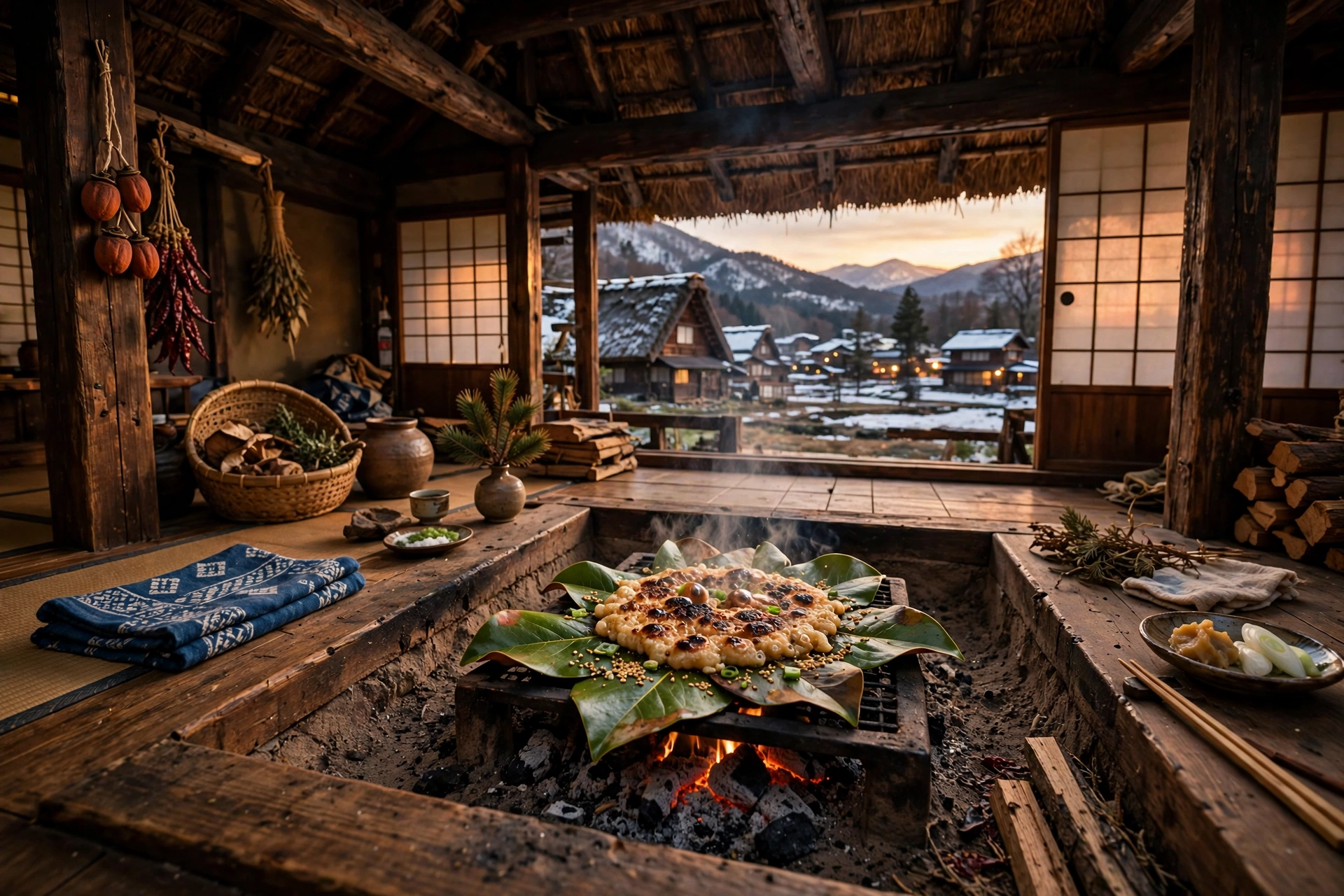
- Hoba miso — miso mixed with leeks and mushrooms, spread on a dried magnolia leaf and grilled over a small charcoal fire at your table. Hida's signature country dish.
- Gohei mochi — pounded rice on a skewer, grilled and glazed with walnut-miso sauce. The classic snack from stalls in the village and at Takayama's morning markets.
- Takayama ramen — in Takayama, order the local noodles: thin, curly noodles in a clear soy-sauce broth. Old signs often call it chuka soba.
- Doburoku — the cloudy festival sake of Shirakawa Hachiman Shrine's autumn festival.