
Okayama — Kurashiki in half a day: the Bikan Quarter, Ivy Square and the City Art Museum
Okayama is one of Japan's sunniest prefectures — its nickname is the "Land of Sunshine" — and Kurashiki is its old merchant town, about 15 minutes by train from Okayama Station. In the Edo period, goods moved up and down the Kurashiki River and into the white-walled storehouses that still line it. The quarter that remains is small enough to walk across in minutes, which is exactly why a half day is enough. The sights are the white-walled storehouse houses, the namako walls and the rows of willows along the river — traditional buildings that give the riverside a retro-modern air.
Contents
Why this course works
- Everything is on foot: the three stops sit inside one small quarter, a few minutes apart
- Start and finish at JR Kurashiki Station, about 15 minutes' walk each way
- The order follows closing times: the Kurabo Memorial Hall (last entry 15:45) comes before the City Art Museum (last entry 16:45)
The course, step by step
- 13:00JR Kurashiki Station
Walk south about 15 minutes to the Bikan Historical Quarter
- 13:15–14:00The Bikan Historical Quarter
the canal, the willows, the white walls
- 14:00–15:00Kurashiki Ivy Square and the Kurabo Memorial Hall
- 15:15–16:15Kurashiki City Art Museum
- 16:30Walk back through the quarter to JR Kurashiki Station (about 15 minutes)
Times are a guide for a relaxed pace. If your day falls on a Saturday in July, the evening has one more thing in it — see the night market in the practical information below.
Practical information
- Kurashiki City Art Museum: 9:00–17:15 (last entry 16:45); closed Mondays (the next day if a holiday) and Dec 28 – Jan 4; collection exhibition ¥210 for adults
- Kurabo Memorial Hall (inside Kurashiki Ivy Square): 10:00–16:00 (last entry 15:45); open every day; ¥300 for adults
- Night market: the Kurashiki Saturday Night Market fills the shopping arcades between the station and the quarter on Saturdays in July, 18:00–21:00 (in 2026, July 4, 11, 18 and 25), organised by the Kurashiki Shopping Street Promotion Federation. Dates change each year, so check before you go
| Access | About 15 minutes on foot from JR Kurashiki Station (Sanyo Line and Hakubi Line) to the Bikan Historical Quarter. The course starts and ends at the station |
|---|---|
| Trains | Please check JR West's official timetable and fare pages JR West Sanyo Line 【Kurashiki departures】 timetable (to the official site)JR West Hakubi Line 【Kurashiki departures】 timetable (to the official site) |
| Bus | Walking from the station is the basic way to reach the quarter. City buses of Ryobi Bus and Shimoden Bus leave from in front of Kurashiki Station. Please check destinations and times on each company's official pages |
| Taxi | Kurashiki Taxi 086-422-5500 · Kurashiki Ryobi Taxi Center (Okayama Kotsu) 086-460-0555 · Shimoden Taxi (Kurashiki office) 086-422-0244 · Asahi Kotsu (Kurashiki area) 086-422-2525. Kurashiki Taxi also runs sightseeing taxis. Asahi Kotsu runs a night-view sightseeing taxi to the Mizushima industrial complex, starting and ending at Kurashiki Station |
| Rental car | The quarter is walkable, so you do not need a car for the town walk. At the station's north exit there are the Toyota Rent a Car Kurashiki Station North Exit shop and the JR Eki Rent-a-Car Kurashiki Station office; on the south-exit side is the Nippon Rent-A-Car Kurashiki Station office, and south of the quarter there is also a Toyota Rent a Car Kurashiki Bikan Quarter shop. A car makes it easier to range out toward Washuzan, Kojima and the Seto Ohashi Bridge. Please check prices and hours on each company's official pages |
| Rental cycle | Bicycles can be rented at the Kurashiki City Tourist Rest House in the Bikan quarter (regular bicycles and electric-assist bicycles). Numbers are limited. Please check prices and rental hours in the City of Kurashiki's official information |
| Rickshaw | Ebisuya (Okayama Kurashiki branch) runs rickshaw tours of the Bikan quarter, departing from in front of the Kurashiki Monogatari-kan and the Kurashikikan Tourist Information Office. Please check courses and prices on Ebisuya's official pages |
From the editor: I only learned about the night market after moving to Kurashiki. If your trip lands on a July Saturday, it is worth staying out for.
Sightseeing spots
This course visits three sightseeing spots in the Bikan quarter, in this order: the streets along the Kurashiki River, Kurashiki Ivy Square and the Kurabo Memorial Hall, and the Kurashiki City Art Museum. All are within walking distance of the station
The Bikan Historical Quarter
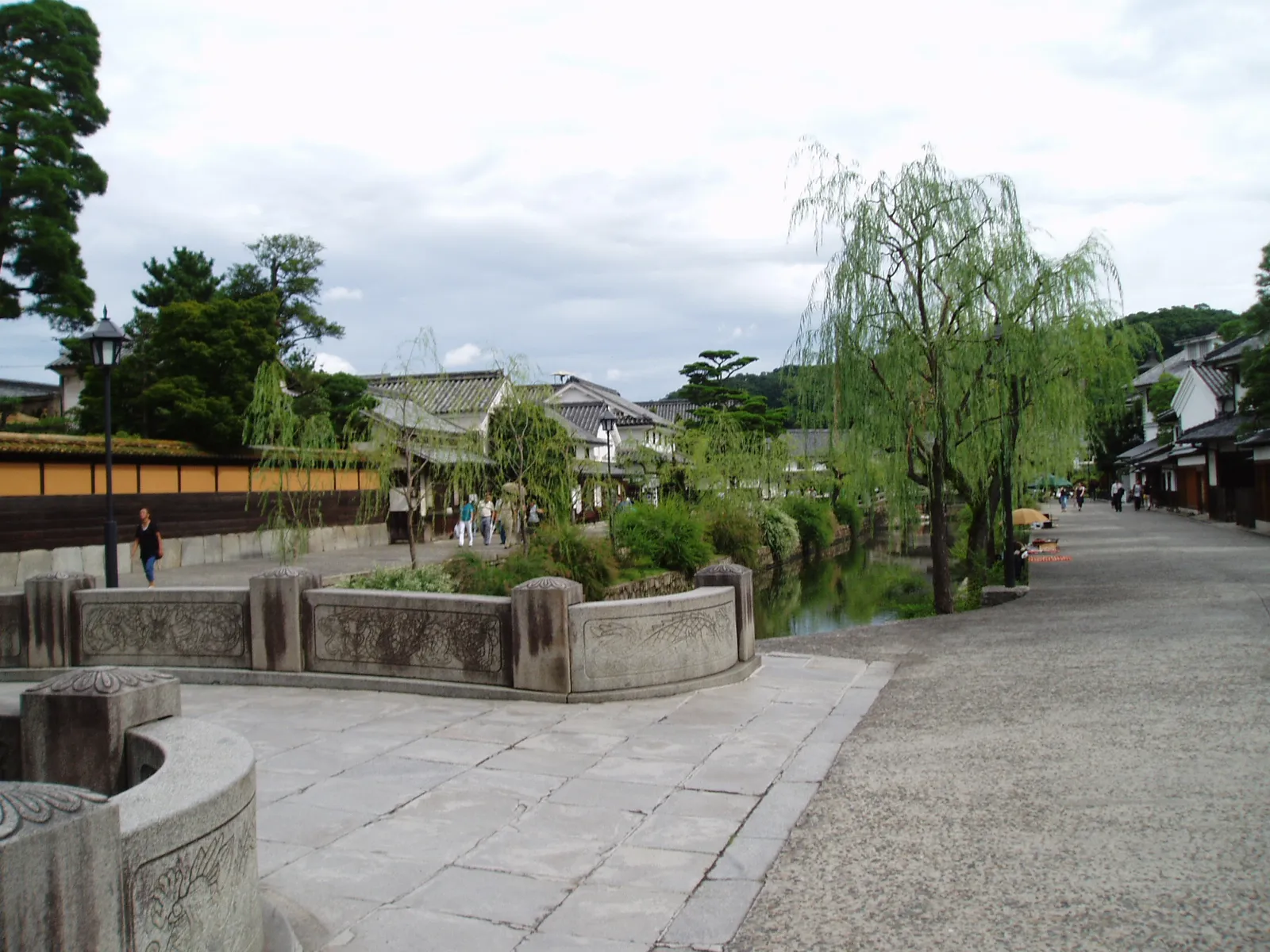
The Kurashiki River runs through the middle of the quarter, willows along its banks and white-walled storehouses — kura — on both sides. Many of the old merchant houses are now small museums, craft shops and cafés, and the streets behind the canal (Honmachi and Higashimachi) are quieter lanes of townhouses. There is no gate and no ticket: the quarter is simply a living part of the town, and walking it is free. In the evening the streetscape is lit, and the white walls take on a different face.
【Moka's top pick!】 The star of this course: white-walled streets, and sweets at the machiya cafés as well. In the evening the streetscape lighting comes on, and the quarter shows a different face from the daytime.
| Hours | No set hours (there is no gate; the quarter is part of the living town) |
|---|---|
| Closed | None |
| Admission | Free (walking the quarter) |
| Access | About 15 minutes on foot from JR Kurashiki Station |
| Official site | The Bikan Historical Quarter (Kurashiki tourism site) |
Kurashiki Ivy Square and the Kurabo Memorial Hall
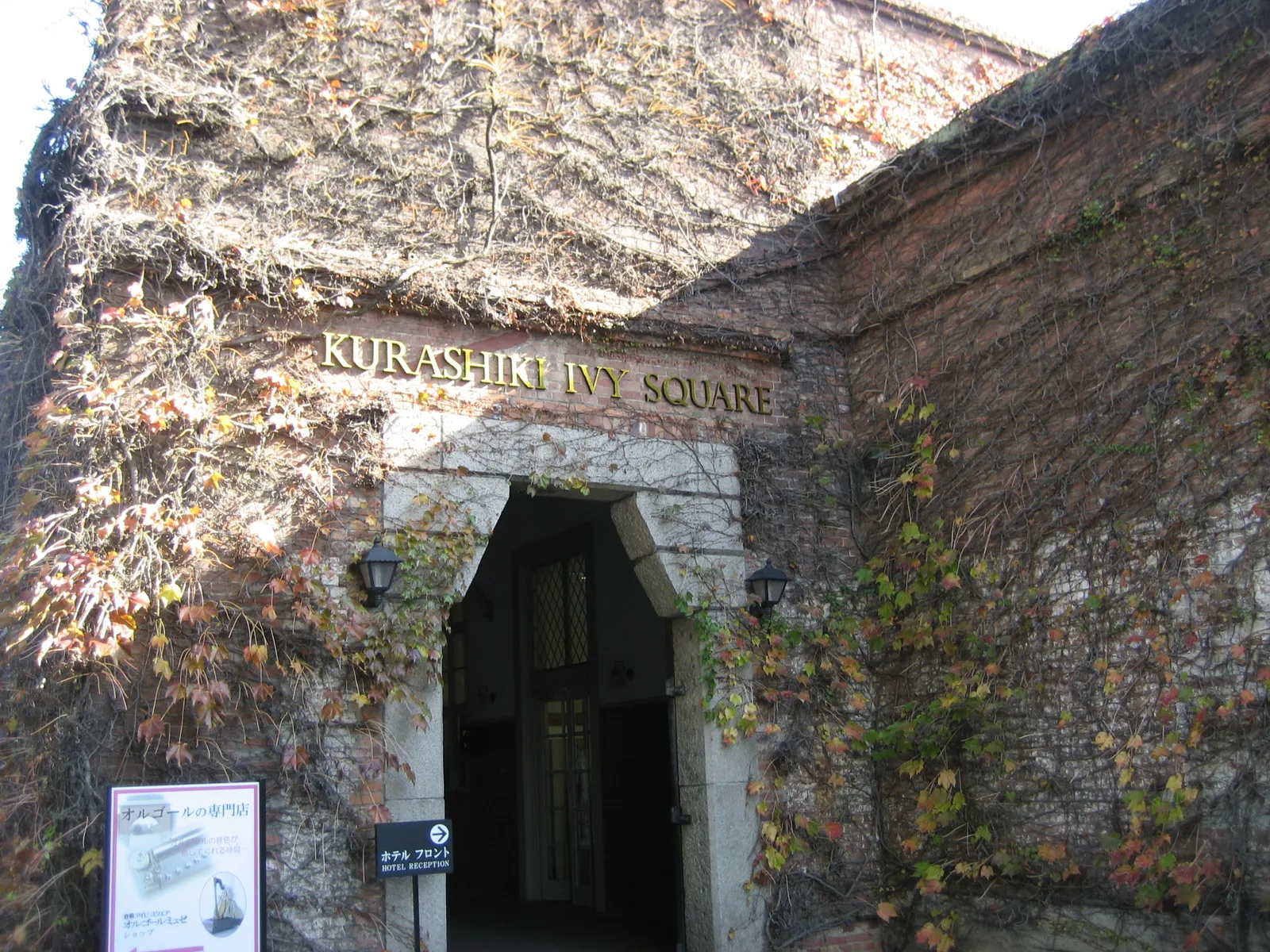
At the eastern end of the quarter, the red-brick buildings of the first Kurashiki Spinning mill — Kurabo, founded in Kurashiki in 1888 — stand covered in ivy. The mill is now a complex with a hotel, shops and craft workshops, and its grounds are free to stroll. Inside the old raw-cotton warehouse, the Kurabo Memorial Hall tells the story of the company and of Kurashiki's textile industry in about 500 exhibits; the building itself is a registered cultural property.
【Moka recommends】 Last entry to the Kurabo Memorial Hall is early, at 15:45. On this course it comes before the City Art Museum for that reason.
| Hours | 10:00–16:00 (last entry 15:45) — Kurabo Memorial Hall |
|---|---|
| Closed | Open every day — Kurabo Memorial Hall |
| Admission | ¥300 (adults) / ¥250 (students); preschool children free (Kurabo Memorial Hall). Walking the Ivy Square grounds is free |
| Access | About 15 minutes on foot from JR Kurashiki Station (at the eastern end of the Bikan quarter, inside Kurashiki Ivy Square) |
| Official site | Kurabo Memorial Hall (Kurabo official site) |
| Phone | 086-422-0011 (Kurashiki Ivy Square) |
Kurashiki City Art Museum
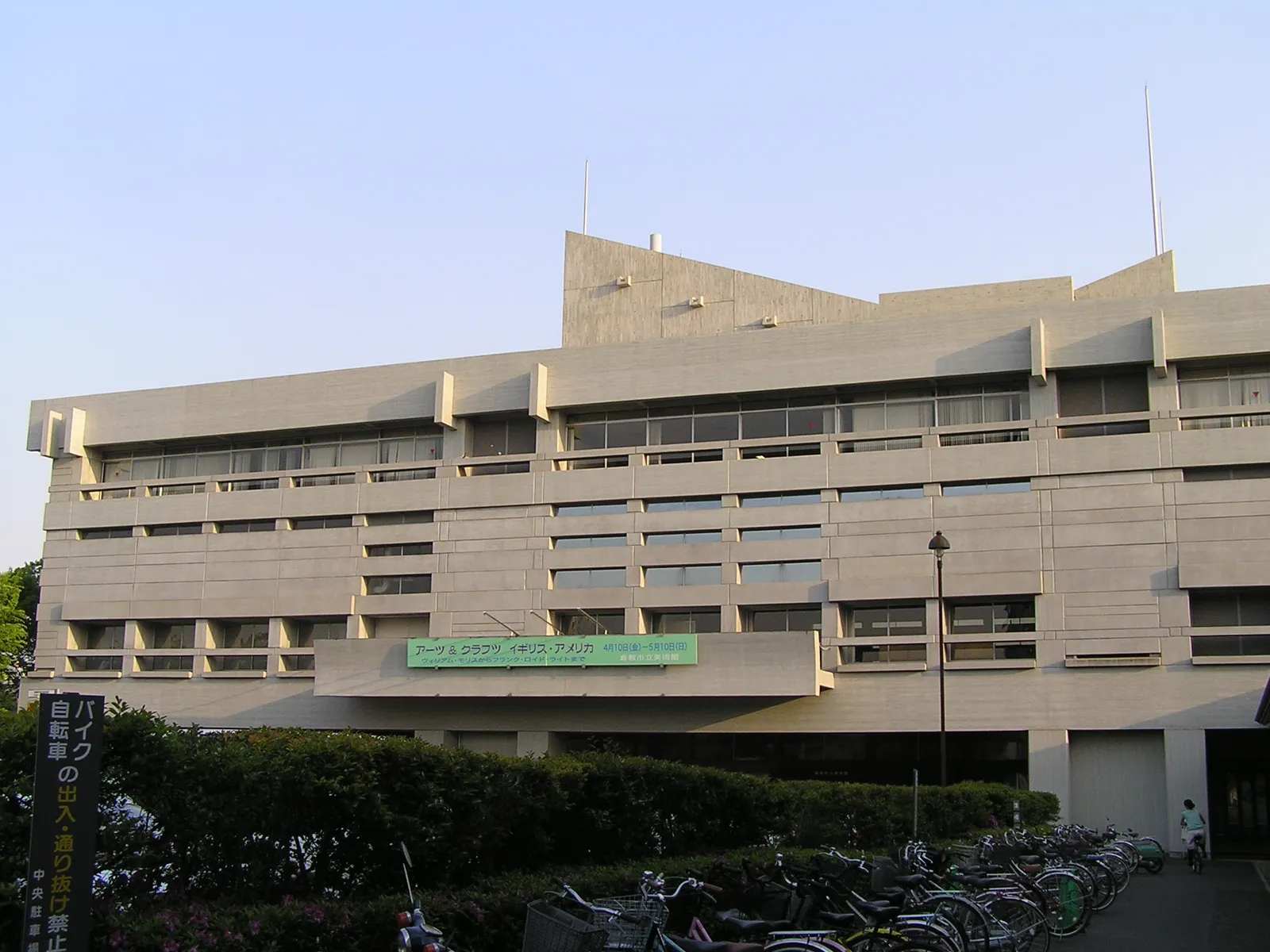
A few minutes west of the canal, the City Art Museum stands in the former Kurashiki Town Hall: a concrete building designed by Kenzo Tange, used as the city office until 1980 and now a registered cultural property in its own right. The collection holds more than 12,000 works, centred on artists connected with Okayama, including the painter Ikeda Yoson. It is a calm, uncrowded end to the course.
【Moka recommends】 A quiet museum that rarely gets crowded — a calm way to finish the half day.
| Hours | 9:00–17:15 (last entry 16:45) |
|---|---|
| Closed | Mondays (the following day if Monday is a holiday), and December 28 – January 4 |
| Admission | Collection exhibition: ¥210 (adults) / ¥100 (high-school and university students) / ¥50 (elementary and junior-high students); visitors aged 65 and over enter the collection exhibition free. Special exhibitions are priced separately |
| Access | A few minutes west of the canal (about 15 minutes on foot from JR Kurashiki Station) |
| Official site | Kurashiki City Art Museum (Kurashiki City official site) |
| Phone | 086-425-6034 |